Friday, 21 March 2014

The not-so-slow death of ITSM (or, Be a mammal)

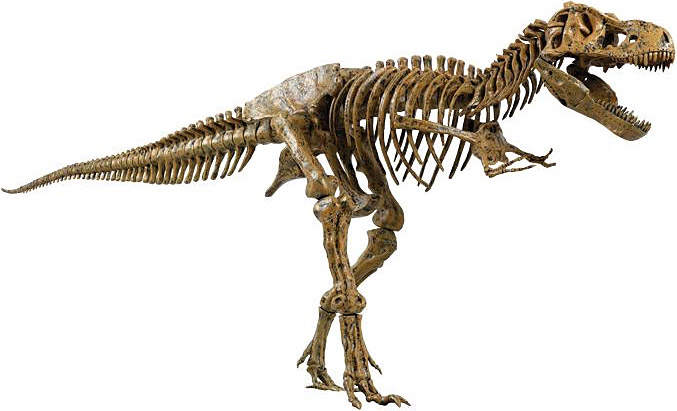
Raar!

It's easy to say it with hindsight, but I was only a real ITIL/ITSM fanboi for a short while. This was in the years between 1999 and 2007. Eight years was long enough to feel the pain of the major flaws. By the middle of the first decade of this century, I'd gone slightly cold on it, hence the focus on work psychology, data, and the softer side of IT service. I'll admit that I was hoping that ITSM could be fixed, but I wouldn't have bet my house on it.

As I say, hindsight is a wonderful thing, but thankfully traces of my scepticism remain thanks to the wonders of the interweb. See that in 2010 I was ruminating about the death of ITIL, and in my 2013 presentation at the Service Desk and IT Show in London I was looking forward to the post-ITSM service desk.

Naturally, I wasn't taken very seriously by the powers that be, although it became obvious that others were detecting the same signals as I was. Now that cloud, BYOD and other shifts appear to be in the process of removing our clammy hands from the technological levers of power, it must be said that across the landscape of corporate IT, ITSM practitioners are beginning to look over their shoulders a little. We probably look a little bit like the dinosaurs did when that extinction event meteorite was on its way earthbound.

"What the fuck's that?"

Sunday, 9 March 2014

I Dream Of Kant

In the last 6 months, when I've found myself with a little free time away from the various technology jobs, the household duties, and writing and promoting my book, I've been studying the ideas of the 18th century philosopher Immanuel Kant. I had been picking up little snippets of his conclusions over the last 4 or 5 years and I'm really pleased that I'm getting properly stuck into his theorising now. I think the man was genius of the highest order.

A few weeks back I had a really weird dream. It was some kind of futuristic scenario, where I was being made to commit hi-tech hari-kari for some unspecified misdemeanour. Everyone in the dream was rather cheerful and chipper about the whole affair including myself which in itself was highly odd. However the best part of the dream was that as I was waking up, I had a bit of a Kantian epiphany about the process of dreaming.

Sunday, 9 February 2014

Customer Service - How We Will Be Working In The Future

In the years when 'youthful' was an adjective that could reasonably be applied to my personage, I used to occasionally (and pretentiously) declare myself a "Zeitgeist surfer". By this I meant that I always seemed to be up there with the trends and current thinking. While I'm certainly no longer a tastemaker, or hip-to-the-now in the worlds of music and fashion, I still seemingly retain the ability to spot the next interesting thing in other fields.

I rather fortunately moved into data and business intelligence (BI) around 2006/2007 just at the time when it was getting ready to boom. Because of this I have enjoyed some rewarding contracts over the last six years. As is always the way in IT, the sands are shifting and the market for building data warehouses and reporting suites seems to be on the wane (saturation?), while anyone with a bit of SQL knowledge is selling themselves as a BI specialist. It's only those who understand predictive analytics (i.e. real multivariate statistical modelling) who can command the big bucks these days.

However, since 2009 I've also been deeply concerned with all things people-related in organisations and especially in service related IT functions - that is, the sub-sector known by the term  IT service management (or ITSM). I spent a large chunk of 2011 writing a thesis about organisations, staff and good service provision. This was never published but provided the inspiration and basis for a book that I have recently completed. Its themes are similar to the earlier thesis, but the conclusions are clearer and I believe it contains an interesting and radical proposal for customer service thinking in the 21st century.

Friday, 10 January 2014

Old School Psych Dude

Rock and roll.

I'm doing the January not drinking very much thing.

So, it's Friday night, and instead of bonhomie in a pub somewhere, I'm in my office at home watching videos of old psychology dudes; in this instance, none other than Carl Gustav Jung.


This video is amazing. They don't make psychs like this any more. His utterances are dripping in open-mindedness, humanity and courage. It makes today's reductionist and materialistic theorising look pretty limited in comparison.

I also love the way these old television interviews provide a fuller discussion of the issues than we're used today. Not a great deal in the way of soundbiting or dumbing down here.

Clear 40 minutes out of your day to watch this!

Monday, 30 December 2013

Social Fiction

So here we are.

The future.

2014 is certainly in the realms of that which in the nineteen-sixties and seventies we used to designate as "the future". We've long passed Arthur C. Clarke's milestone of 2001 (nothing remotely HAL-like existed then), and all except the last date point in Ray Bradbury's The Martian Chronicles are already in the past (April 2026 if you're interested).

We now exist in that tomorrow we used to eagerly read about as children. It's extremely interesting therefore to revisit Isaac Asimov's predictions for 2014 made in 1964: flying cars, robots, videophones, enforced leisure

The cybernetic and singularity dreamers are ensuring that we are doing our utmost to ensure the coming to pass of the first three items in that list. Sure, flying cars may be a little way off, but Google's recent purchase of Boston Dynamics, and neuromorphic processors mean advanced robotics and artificial intelligence are a little closer to becoming a reality.

Thursday, 17 October 2013

In Praise of Communication

I've recently been contracted to work in London, city of my birth, of my bringing up, and of certain excesses during my 5 years here around the millennium. It's interesting to note the way that it has changed, especially when compared to my youth in the 1970s and 1980s. Back then the capital was a little more down-at-heel, a little more social; and socialist - I mean, our leader was "red" Ken Livingstone after all. And at the risk of sounding like an old fart - one who can't keep up with the times, I must admit that I think London was a far better place to exist back then. There were more spaces and structures through which to relate to your fellow woman or man. Symptomatic of the modern London (of which I'm about to get polemic on yo' ass) is the issue of communication. I'm not talking about rude cockneys or the silence of the Central Line - things have always been that way. No, the communication which I wish to dwell upon is of an altogether different nature.

Thursday, 25 April 2013

IT Service? Welcome To The Social Sciences

Firstly, I must apologise for being such a diverse soul. There are readers who discovered this blog for postings about IT service management, others were drawn to it because they were interested in musings upon organisational (and other types of) psychology. I've even commented once or twice about social issues such as social luddism and racism which probably attracted others. The most recent posting was related to psychology, but touched upon phenomena currently considered to be at the far edge of the discipline - NDEs.

But buoyed by my recent talk at the Service Desk and IT Show in London (#SITS13) recently, I think it's time to go back to basics, or dare I say - back to ITSM (insert wink emoticon here). Although, with this particular post I'm going to have my cake and eat it; that is ITSM, psychology and sociology are all going to be wrapped up in one post, so it should keep all the diverse followers happy.